B2B SaaS Case Study: Document Sharing

5 Star reviews on TrustPilot
B2B SaaS Case Study: Document Sharing
From €300K to ~€2M ARR in 12 Months
The Brief
The client came in at roughly €20–25K MRR. Product validated, incumbent identified, but growth was plateauing. They had a clear positioning advantage against a legacy, overpriced competitor that had stopped shipping. What they lacked was a focused, executable growth system.
My first move was to audit everything they had already tried. They had touched 14+ marketing channels with no clear winner. I cut almost all of them.
What stayed:
- SEO focused on bottom-of-funnel demand capture
- LinkedIn to compress the trust gap with in-market buyers
- The product's own natural sharing behaviour as a distribution channel
The goal was not traffic volume. It was reaching people who already had the problem and were actively searching for a solution. That distinction shaped every decision that followed.
What I Built for SEO
I built a deliberate trust compression system aimed at the exact ICP: funded founders, VCs, and M&A professionals already in the market. Every page had a defined job.
The SEO System I Put in Place
- 700+ indexed pages built from near zero within the year programmatic at the core, human-edited to maintain quality and strip generic AI tone before publishing
- "Alternative to X" pages as the number one acquisition lever targeting searches like "[Incumbent] alternative" where the visitor already had budget and urgency
- AI-assisted listicles and database-driven articles (e.g., "Top investors in [Country]") generated at speed then edited for credibility
- Solution and use-case pages (e.g., "Document sharing for legal firms") low competition, high purchase intent, directly mapped to the product's core jobs-to-be-done
- Multilingual landing pages rolled out after the English engine was proven used as a multiplier, not a starting point
Backlinks were deprioritised entirely. The roughly 6,000 links the site accumulated came from Product Hunt launches and directories, not outreach. I tracked which pages drove sign-ups via product analytics and doubled down there. Everything else was cut.
What I Built for LinkedIn
LinkedIn served one function: compress the trust gap for prospects who were already problem-aware from organic search. It shortened the sales cycle without a single cold outreach message.
How I Structured the LinkedIn Content
- Metric-rich milestone posts real MRR growth rates, churn figures, visitor counts, and customer numbers published monthly or quarterly. No vague "we're growing" updates.
- A declared public challenge committing to a specific ARR goal over a fixed timeframe, documented live. This created a narrative that kept the ICP following and returning.
- Opinionated positioning against incumbents openly framing the legacy alternative as a tool that "treats users like hostages." Designed to polarise and attract decision-makers, not stay neutral.
- Founder-level operational transparency posts about replying personally to every support email, weekly customer conversations, what shipped, what got killed. The kind of content serious B2B buyers trust.
- SEO results repackaged as LinkedIn stories turning traffic wins into narrative posts that drove additional traffic back to the ranked pages themselves.
The Product Loop I Left Running
Every document link sent by a paying customer reached a non-user. No forced referral mechanics were needed. The product was built for sharing, so usage was distribution. I made sure the team leaned into this rather than overlaying paid campaigns that would have masked the signal and confused the data.
The Results
Over 12 months of integrated, focused execution:
From €25K MRR to approximately €160K MRR in 12 months
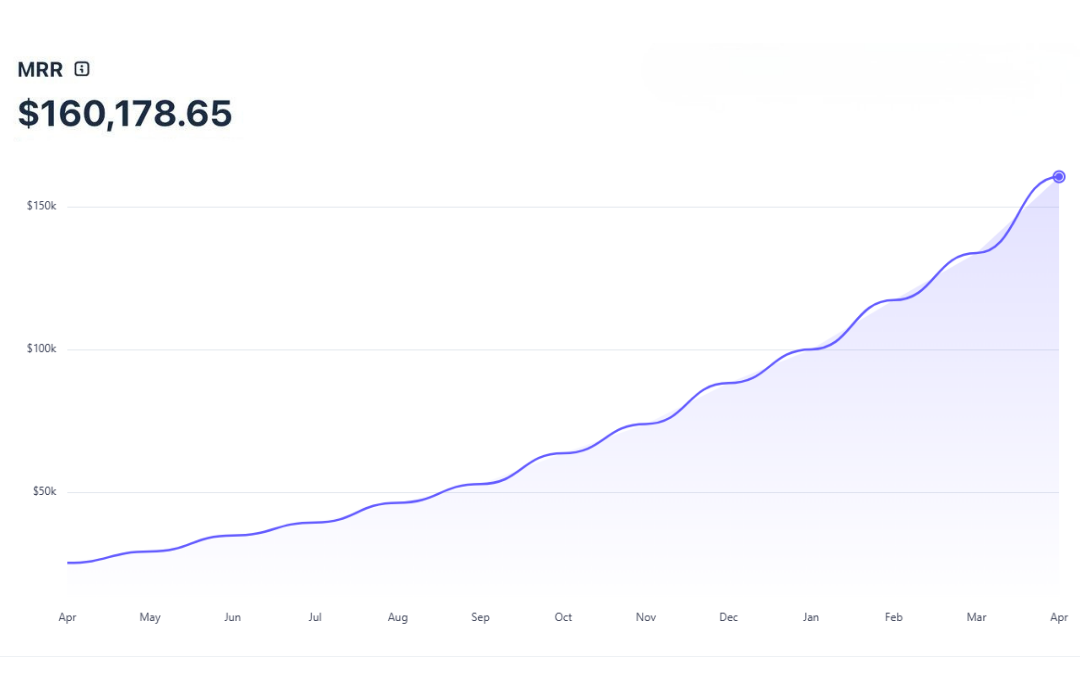
Growth Trajectory
| Period | MRR | Key Driver |
|---|---|---|
| January 2025 | ~€20–21K | €250K ARR baseline, growth strategy locked in |
| February 2025 | +28% MoM | 50 content pieces shipped, focused SEO sprint |
| September 2025 | ~€75–83K | €900K–€1M ARR milestone reached |
| Q1 2026 | +8.7% MoM | 367 new customers, 537K document links viewed |
The Real Lever
Three things compounded simultaneously, not sequentially: SEO captured purchase-ready demand without ad spend, LinkedIn compressed trust with buyers already in-market, and the product turned every paying customer into a distribution channel. The discipline was in the cuts. Killing 11+ channels to go all-in on three is where most growth stalls. That narrowing is what made the compounding possible.
Why It Worked
1. Diagnosis Before Execution
I did not add channels I cut them. Starting with a channel audit and eliminating 11+ underperforming tactics before building anything new gave the remaining work room to compound without budget dilution or attention split.
2. Bottom-of-Funnel First
Most SEO programs chase traffic volume. I prioritised purchase intent. "Alternative to X" pages and solution-specific landing pages put the content directly in front of people who already had the problem and were evaluating options. That difference is why traffic converted into enterprise calls and sign-ups, not just visits.
3. Channels That Reinforced Each Other
SEO brought in problem-aware traffic. LinkedIn converted that awareness into trust. The product's sharing mechanic extended reach without paid amplification. Each channel made the others more efficient. No channel operated in isolation.
4. Product Distribution Was Already There
The product's natural sharing behaviour was the highest-leverage distribution channel available. Rather than overlaying paid acquisition on top of it and masking the signal, I leaned into it and measured what it was actually producing. In Q1 2026 alone, that meant 537K links viewed and 1.46M pageviews from existing customer usage.
This Same Model, Now Available Fractionally
The approach that drove these results is exactly what I bring to clients now, adapted to fractional engagement:
- Channel audit before any execution begins cut before you build
- Bottom-of-funnel SEO focused on purchase-ready demand, not volume
- LinkedIn content that compresses trust with in-market buyers
- Single operator accountable for acquisition outcomes, not activity metrics
You get this level of ownership and focus without the full-time cost.
Book a Free Strategy Call